Best Franchise Opportunities in San Francisco, California

Get Your Free, Personalized Franchise Match Report

Answer a few questions. We’ll email you and follow up if you want help.

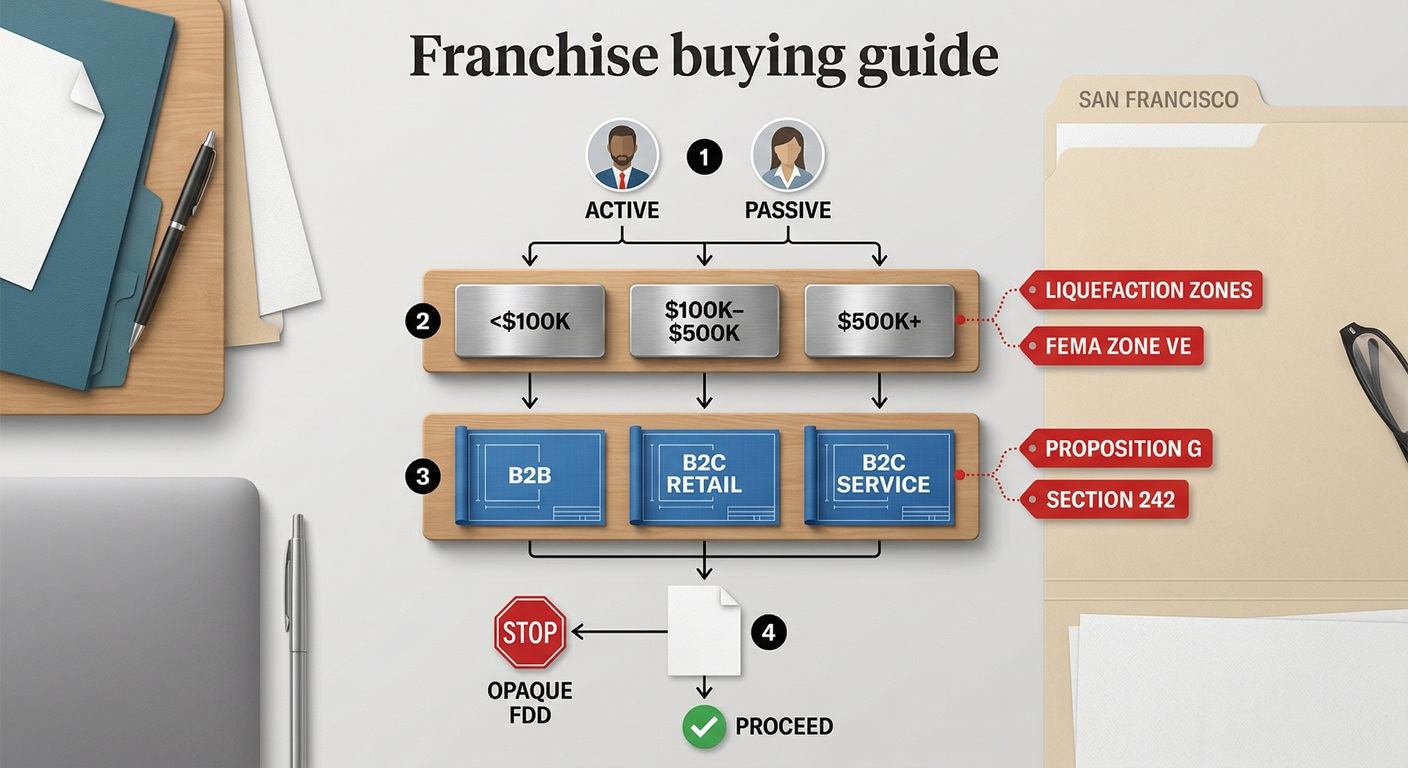
Step 11 / 6

What kind of ownership style fits you best?

What’s your investment comfort range?

What kind of business fits you best?

How soon do you want to start?

What’s your weekly time capacity?

Where should we send your results?

Free to buyers. We may be compensated by franchise brands if you pursue an opportunity. No spam.

Book a free call to discuss 100s of opportunities we didn’t have space to display on this page.

Disclaimer & Affiliate Disclosure: This content is for informational purposes only and does not constitute financial, real estate, or legal advice. Franchise investments carry significant risk. We may receive referral fees from featured brands. Always independently verify local market data, review the Franchise Disclosure Document (FDD), and consult a licensed CPA or attorney before investing capital..
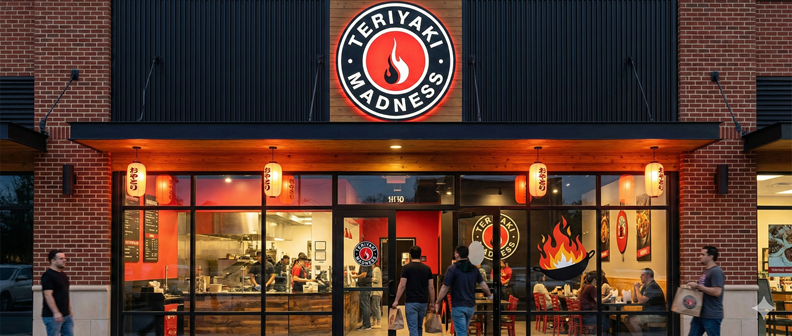
Teriyaki Madness

The UCSF Parnassus Heights Campus supplies a massive daily population of approximately 29,000 potential customers within walking distance, anchoring the immediate trade area. The iconic success of Ebisu at 1283 9th Ave highlights the immense local appetite for Asian cuisine.

By operating a high-volume protein model, Teriyaki Madness captures overflow demand from consumers seeking immediate service without extended wait times. Delivery drivers must navigate notorious double-parking on Irving Street, compounded by Residential Permit Parking zones on surrounding side streets.

Entering the Sunset District triggers strict “Formula Retail” regulations, mandating a Conditional Use Authorization process that delays openings by 6 to 12 months. This requires operators to budget between $2,747 and $10,000 for CUA fees, plus an estimated $20,000 for expediting services.

Internally, the lunch rush relies on the physical endurance of cooks to maintain “Wok Hei” agitation, while operators must mandate nightly cleaning of hood filters to prevent heavy grease buildup.

To streamline this volume, the integration of Olo, Revel, and Punchh automates data flow directly to the kitchen. Sources: sfplanning.org, ucsf.edu

Franchise overview
Marketing fund (in %)3%
Minimum cash required$107,500
Franchise fee$45,000
Who Has an AdvantageA Multi-Unit Empire Builder to truly benefit from supply chain economies.
Who Is a Bad FitA person unfamiliar with the intensity of running a kitchen.
Request more information now
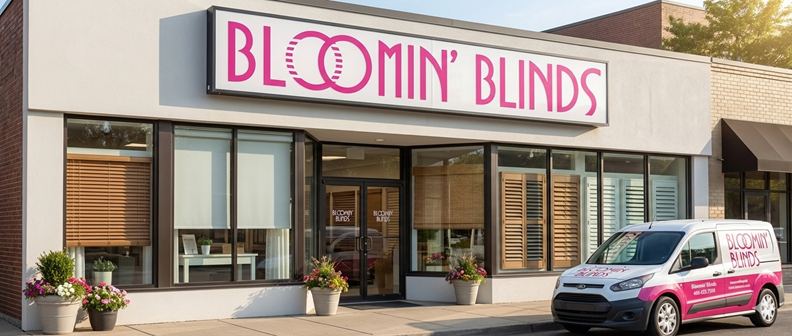
Bloomin' Blinds

Operating a mobile service fleet in the Richmond District means directly navigating the Geary Boulevard Improvement Project, where active BRT construction, lane reductions, and parking removal cause localized access disruptions.

Immediate consumer demand stems from the Kaiser Permanente Geary Campus, providing over 1,000 full-time, high-income medical personnel. The commercial market is dominated by National Blinds & Flooring at 778 Brannan St, which successfully secures B2B developer contracts.

Bloomin’ Blinds operates as a market complement, explicitly targeting the residential retrofit gap by focusing on dedicated B2C post-sale care. Daily execution requires vans stocked with “Crisis Kits” to bypass unknown substrates like steel lintels, while enforcing “White Glove” etiquette using booties and vacuums inside homes.

Establishing a physical storefront triggers Proposition G Formula Retail Restrictions enforced by the San Francisco Planning Commission. This Conditional Use Authorization takes 4 to 8 months, carrying a $2,747 application fee and potential legal bills up to $80,000.

To maintain sales productivity despite these hurdles, National Call Center agents qualify leads and book appointments directly to the franchisee’s calendar. Sources: sfmta.com, mydoctor.kaiserpermanente.org

Franchise overview
Marketing fund (in %)2%
Minimum cash required$25,000
Franchise fee$49,500
Who Has an AdvantageA charismatic owner-operator with strong project management skills, comfortable with fleet management.
Request more information now
About the page’s author, Thomas Jepsen
Franchise consultant & growth strategist
As seen in: Yahoo Finance

Master’s in Accounting, Strategy & Control. FBA-certified in franchises and FDD analysis. Raised institutional funding and completed a venture exit. Has advised aspiring franchisees on 20+ different business categories. Thomas helps aspiring franchisees evaluate brands objectively.

Thomas Jepsen
Paul Davis

Operating a Paul Davis franchise in Bernal Heights requires navigating a highly regulated and physically constrained infrastructure. The neighborhood’s dense concentration of high-value, wood-frame residential structures creates consistent demand for remediation services.

However, servicing these properties means operating under the Bernal Heights Special Use District Section 242, which restricts curb cuts to preserve parking and severely complicates fleet access. Onsite logistics are further hampered by narrow streets, aggressive street-sweeping enforcement, and the Northwest Bernal Residential Parking Permit Area AA, exposing service vehicles to high towing risks.

Internally, operators must rigorously track expensive LGR Dehumidifiers via digital systems and meticulously record daily psychrometric moisture readings in a “Dry Log.” Locally, The Restoration Company is a highly respected expert known for specialized skills like waterproofing ship decks.

Yet, their boutique scale creates uncaptured demand for immediate disaster mitigation. Paul Davis is engineered to fill this exact service gap by integrating RMS and MICA software to sync real-time field data with Xactimate, facilitating audit-proof estimates and reducing claims cycle times.

Franchise overview
Marketing fund (in %)N/A
Minimum cash required$87,500
Franchise fee$136,500
Request more information now
USA Insulation

Deploying mobile installation assets in the Noe Valley neighborhood of San Francisco involves navigating steep topographic grades that make 24-foot rig leveling and operation dangerous. Finding functional street space for these rigs is notoriously difficult, and while local driveway laws permit parking in front setbacks, strict curb-cut regulations limit staging options.

Operators must navigate formula retail controls that heavily regulate chain-based storefront presences. The territory holds immense capacity for HELOC-funded renovation, supported by a reported median home value of $1.89 million.

Entrenched incumbents like SF Spray Foam capture a strong baseline of this word-of-mouth market for Victorian homes, identifying an active local appetite for specialized retrofit services. Internally, managing crew physicality is required to reduce turnover from working in extreme exterior and attic temperatures.

Onsite, installers must mechanically “feel” the back-pressure of the injection gun to fill blind wall cavities without blowing out drywall. To accelerate the sales cycle in this market, the USA Insulation model utilizes a “Rebate-Ready” foam certification designed to leverage federal energy credits.

Franchise overview
Marketing fund (in %)2%
Minimum cash required$70,000
Franchise fee$50,000
Who Has an AdvantageA sales team builder with technical/construction material experience.
Who Is a Bad FitThe operationally-passive desk lover who doesn't want to get behind the wheel.
Request more information now
Franchise owner success story
Client Success Story
“Thomas helped me find the franchise that actually fit my goals.”
— Jeff, Franchise Owner
Read case study
Rush Bowls

Managing third-party logistics in the Haight-Ashbury corridor requires strict adherence to Yellow Zone Enforcement, where gig-economy drivers face predatory ticketing if exceeding the 3-minute limit in commercial loading spaces.

Rush Bowls enters this restricted trade area by offering an indoor, climate-controlled dining destination that serves as a comfortable complement to established walk-up institutions like Sidewalk Juice at 791 Haight St.

This elevated dining format is engineered to capture the massive daily foot traffic generated by the nearby UCSF Parnassus Heights campus, which brings 12,000 staff, students, and patients to the neighborhood.

Inside the store, staff must rigorously inspect IQF fruit deliveries for thaw-refreeze clumping to maintain texture standards, while executing Clean Spoon protocols with squeeze bottles to manage sticky ingredients.

When calculating initial CapEx, franchisees must navigate San Francisco Planning Code Section 303.1, which mandates a Conditional Use Authorization for formula retail, potentially adding up to $100,000 in holding and legal costs.

To optimize this expensive real estate, the franchise utilizes a specialized Blender Wall pivot-point layout engineered to maximize throughput within a compact 500-1,200 square foot footprint.

Franchise overview
Marketing fund (in %)2%
Minimum cash required$57,500
Franchise fee$39,000
Who Has an AdvantageThe health-conscious marketer who is familiar with guerrilla marketing.
Who Is a Bad FitThe supply chain novice.
Request more information now

Factors to consider

Retailers and fixed-location models expanding existing footprints face regulatory interactions with the Central SOMA Infrastructure Fee and Fund, which extracts a scheduled $27.99 per gross square foot for Tier A commercial space alterations. New office developments must factor in the Transit Center District Transportation and Street Improvement Impact Fee, due at permit filing, which assesses $6.72 per gross square foot and an additional $34.43 for exceeding a 9:1 FAR.

Verify all assessments with the San Francisco Planning Department to account for annual inflation adjustments. Sites near the shoreline may fall into FEMA Flood Zone AE and VE, where operators will need to verify if specialized flood-resistant construction standards and federally backed insurance are triggered. In the labor market, massive corporate hubs like Salesforce act as macro-economic anchors, drastically increasing local wage competition and retention hurdles for administrative and support staff.

Local operator insights

Lately, local operators managing fast-casual dining told me they are navigating a highly volatile entitlement landscape. Franchisees I surveyed are thrilled that Ordinance File No. 250816 dismantles restrictive chain controls. However, they remain highly concerned about heavy staging for the Potrero Yard Modernization Project, which obliterates localized access. Furthermore, the transition to the PermitSF initiative is triggering severe review instability.

As a next step, operators are preemptively securing third-party expediters to manage the elevated risk of mechanical designs vanishing into departmental black holes.

Our Evaluation Methodology

  • 1
    Franchisor Vetting & Financial Due Diligence

    FDDs scrutinized, tying brands to energetic San Francisco's pulse. Item 19 & litigation vetted. Strong financial statements provide the financial bedrock.

  • 2
    Local Market Feasibility & Demographic Alignment

    Franchises shown align with San Francisco's population density, technology sector earnings, and entrepreneurial climate. Data-backed, focused on time-tested local appetite.

Expert Reviewer(s)

Poll Morefield
Poll Morefield
Franchise Lawyer

15+ years of experience with franchise law.

Fred M. Wolfe
Fred M. Wolfe
CPA

10+ years experience as a CPA.

Earnings disclaimer

If any earnings claims are made for a prospective franchisor, those are verified against the Item 19 FDD version specified.

Disclaimer: The information above is not an offer to sell or a solicitation of an offer to buy a franchise. Offers are made only through the delivery of a FDD. Consult a lawyer when reviewing an FDD. Investment ranges/requirements sourced from FDDs.

Book Free Franchise Consultation