Best Franchise Opportunities in Minneapolis, Minnesota

Get Your Free, Personalized Franchise Match Report

Answer a few questions. We’ll email you and follow up if you want help.

Step 11 / 6

What kind of ownership style fits you best?

What’s your investment comfort range?

What kind of business fits you best?

How soon do you want to start?

What’s your weekly time capacity?

Where should we send your results?

Free to buyers. We may be compensated by franchise brands if you pursue an opportunity. No spam.

Book a free call to discuss 100s of opportunities we didn’t have space to display on this page.

Disclaimer & Affiliate Disclosure: This content is for informational purposes only and does not constitute financial, real estate, or legal advice. Franchise investments carry significant risk. We may receive referral fees from featured brands. Always independently verify local market data, review the Franchise Disclosure Document (FDD), and consult a licensed CPA or attorney before investing capital..
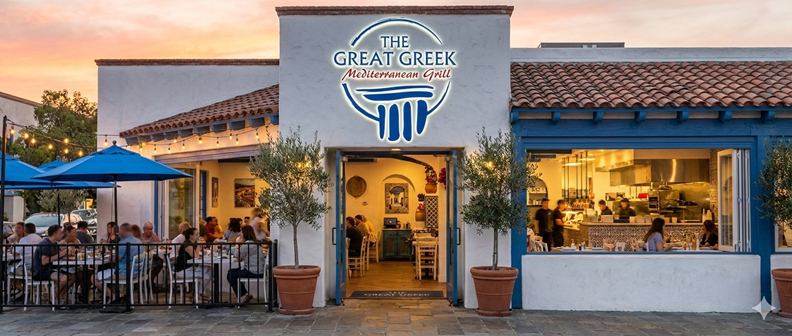
The Great Greek Mediterranean Grill

Winter operations are severely impacted by the Northeast Arts District Snow Emergency rules, which ban parking on specific sides of Central Avenue during plowing. Operators must project a 20% to 40% revenue drop during snow bans and warn customers of a $200 towing risk to preserve goodwill.

The historic presence of Emily’s Lebanese Deli at 641 University Ave NE establishes a proven baseline for Middle Eastern fare in the neighborhood. By deploying a digital-first payment and ordering system, The Great Greek Mediterranean Grill captures an underserved consumer base seeking modern transactional convenience.

The nearby University of Minnesota Twin Cities, locally reported at approximately 56,666 students, supplies massive demand for fast, affordable dining. Inside the kitchen, staff must adhere to strict grease interceptor maintenance schedules to manage the viscosity of olive oil and animal fats.

Additionally, operators enforce “Utensil Discipline” and station segregation to prevent cross-contamination of high-risk allergens. To streamline complex recipes like Moussaka, the franchise uses codified “Build Cards” and batch prep methodologies, which facilitates the hiring of entry-level prep cooks.

Sources: minneapolismn.gov, twin-cities.umn.edu

Franchise overview
Marketing fund (in %)3%
Minimum cash required$142,500
Franchise fee$37,525
Who Has an AdvantageA COGS management wizard with experience in complex supply chains (lamb) and a restaurant background.
Who Is a Bad FitA manager unfamiliar with made-to-order food processes.
Request more information now
Camp Bow Wow

Physical accessibility in the Uptown sub-market is heavily restricted by the ongoing two-year Hennepin Avenue reconstruction, creating localized road closures and detours. Within this footprint, Camp Bow Wow targets a concentrated daytime commuter base generated by Abbott Northwestern Hospital, providing a demand pool of over 4,800 healthcare employees.

The local pet care sector is robustly anchored by City Paws Pet Club at 300 S. 2nd St, which successfully commands the luxury-suite market. Camp Bow Wow complements this by addressing an underserved demographic prioritizing strict, certified dog-to-human ratios and standardized safety protocols over visual luxury.

Securing a commercial footprint requires navigating the Animal Boarding Zoning Amendment enforced by the Minneapolis City Council, mandating specific outdoor run setbacks, a three-space parking minimum, and acoustic dampening that increases standard build-out costs by 15% to 20%.

Daily management mitigates staff “Compassion Fatigue” in a loud environment while maintaining rigid isolation protocols for “Kennel Cough” containment. The franchise deploys Tableau BI integration to predict historical occupancy and automate vaccine compliance checks, maximizing facility capacity utilization.

Sources: lims.minneapolismn.gov, lims.minneapolismn.gov

Franchise overview
Marketing fund (in %)2%
Minimum cash required$285,000
Franchise fee$50,000
Request more information now
About the page’s author, Thomas Jepsen
Franchise consultant & growth strategist
As seen in: Yahoo Finance

Master’s in Accounting, Strategy & Control. FBA-certified in franchises and FDD analysis. Raised institutional funding and completed a venture exit. Has advised aspiring franchisees on 20+ different business categories. Thomas helps aspiring franchisees evaluate brands objectively.

Thomas Jepsen
Magnolia Soap

Operating a Magnolia Soap boutique in Downtown East requires balancing massive foot traffic with intense municipal access controls. The neighborhood’s residential population has quadrupled, and the nearby US Bank Stadium’s 66,000-person capacity generates huge, intermittent surges in retail exposure.

However, the US Bank Stadium Event Zone regulations enforce severe logistical hurdles. Large Block Event Permits mandate 24-hour road closures on critical arteries like Chicago Avenue and 4th Street, deploying security perimeters that sever standard vehicle access to storefronts.

Within the shop, operators face the mechanical requirement of mitigating staff olfactory fatigue through high-turnover HVAC ventilation, while simultaneously balancing the delicate “Maker” production workflow against immediate customer service demands.

In this market, local independent operators currently maintain strong community ties but lack diverse revenue mechanisms. Magnolia Soap is designed to capture broader consumer engagement through its “Party-in-a-Box” protocol, which uses the store’s physical real estate for event hosting during off-peak hours, systematically increasing revenue per square foot and driving paid customer acquisition.

Franchise overview
Marketing fund (in %)1%
Minimum cash required$52,500
Franchise fee$60,000
Request more information now
USA Insulation

Executing onsite service logistics in the Downtown West sector of Minneapolis involves navigating extreme winter climate conditions, where heavy snow and ice continuously complicate site access. Fleet routing is further constrained by a municipal truck ban that strictly prohibits vehicles over 26,000 pounds from utilizing street parking unless actively loading, carrying a $250 fine for violations.

The extreme cold and resulting ice dams generate inelastic demand for structural weatherization. Established regional players like Century Insulation and Lewis Insulation actively capture portions of this market, validating consumer appetite and leaving targeted gaps for technically specialized providers.

For daily operations, technicians must execute a strict gun cleaning ritual with solvents to prevent two-part foam from hardening inside the injection equipment. Crews must also immediately apply acetone-based solvents to dissolve accidental foam overspray from brick or vinyl siding, as cured Aminoplast resin requires expensive substrate replacement.

To quantify the financial impact of these cold-weather variables, USA Insulation equips sales teams with thermal imaging tablets to calculate the R-Value Gap, engineered to support $5,000 to $10,000 tickets.

Franchise overview
Marketing fund (in %)2%
Minimum cash required$70,000
Franchise fee$50,000
Who Has an AdvantageA sales team builder with technical/construction material experience.
Who Is a Bad FitThe operationally-passive desk lover who doesn't want to get behind the wheel.
Request more information now
Franchise owner success story
Client Success Story
“Thomas helped me find the franchise that actually fit my goals.”
— Jeff, Franchise Owner
Read case study
Rush Bowls

Ongoing construction closures at the Upton and 43rd node create localized parking deficits that complicate contractor access and daily vendor deliveries in Linden Hills. When developing a site in this restrictive environment, compliance with the Linden Hills Overlay District prohibits standard backlit awnings and pole signs, forcing operators to budget a 20-40% CapEx premium for externally illuminated gooseneck signage.

Despite these barriers, the corridor benefits from the immense recreational draw of the Minneapolis Chain of Lakes Regional Park, where Lake Harriet’s 6.9 million annual visits funnel active consumers directly into local retail spaces.

Rush Bowls enters this market to capture patrons prioritizing rapid fulfillment, serving as a high-speed complement to esteemed artisanal operations like Vibe Organic Juice Bar at 4720 Excelsior Blvd.

Facility management requires operators to actively monitor Drive Socket wear on blenders and inspect IQF fruit deliveries for thaw-refreeze clumping. To offset localized development costs, the franchise utilizes a No Hoods, No Ovens kitchen architecture, which bypasses the need for expensive Class 1 ventilation and grease traps.

Franchise overview
Marketing fund (in %)2%
Minimum cash required$57,500
Franchise fee$39,000
Who Has an AdvantageThe health-conscious marketer who is familiar with guerrilla marketing.
Who Is a Bad FitThe supply chain novice.
Request more information now

Factors to consider

Retailers and restaurants executing adaptive reuse of existing properties must navigate the Metropolitan Council Environmental Services (MCES) SAC Determination Rules, which reassess maximum potential capacity during change-of-use permits. This triggers the Sewer Availability Charge (SAC), an upfront cost due before building permits are issued, set at a base fee of $2,485 per unit.

Operators should verify this capacity formula with the Metropolitan Council Environmental Services to account for annual inflation adjustments. Mobile operators and logistics teams will need to alter routing to avoid lane closures across the Mississippi River caused by the Hennepin Avenue Bridge reconditioning project scheduled through 2030. The municipal statutory minimum wage for large employers is $15.57, but macro-economic anchors like Target Corporation drastically increase local wage competition, creating notable retention hurdles for support-tier staffing.

Local operator insights

In ongoing discussions, local operators within the sit-down dining sector noted severe regulatory unpredictability. Franchisees I spoke with expressed deep concern over the judicial blockage of the Minneapolis 2040 Plan, which has dragged standard rezonings into protracted legal battles. While urban-format concepts anticipate increased pedestrian throughput from the METRO Blue Line Extension, traditional vehicular access is permanently severed.

Furthermore, municipal inefficiency is stalling major mixed-use milestones, exemplified by the Central Station Block pre-development delays. Consequently, franchisees are pausing institutional lease agreements until the city can reliably clear commercial entitlements through the constrained pipeline.

Our Evaluation Methodology

  • 1
    Franchisor Vetting & Financial Due Diligence

    FDD scrutiny started. MPLS biz climate & robust MN local economy drove stability criteria. Item 19, litigation verified for fiscal evidence in the North Star State.

  • 2
    Local Market Feasibility & Demographic Alignment

    We prioritized franchises with customer audience profiles mirroring Minneapolis' broad audience profile overview, homing in on high-density zones like City center & Uptown.

Expert Reviewer(s)

Poll Morefield
Poll Morefield
Franchise Lawyer

15+ years of experience with franchise law.

Fred M. Wolfe
Fred M. Wolfe
CPA

10+ years experience as a CPA.

Earnings disclaimer

If any earnings claims are made for a prospective franchisor, those are verified against the Item 19 FDD version specified.

Disclaimer: The information above is not an offer to sell or a solicitation of an offer to buy a franchise. Offers are made only through the delivery of a FDD. Consult a lawyer when reviewing an FDD. Investment ranges/requirements sourced from FDDs.

Book Free Franchise Consultation