Best Franchise Opportunities in New Haven, Connecticut

Get Your Free, Personalized Franchise Match Report

Answer a few questions. We’ll email you and follow up if you want help.

Step 11 / 6

What kind of ownership style fits you best?

What’s your investment comfort range?

What kind of business fits you best?

How soon do you want to start?

What’s your weekly time capacity?

Where should we send your results?

Free to buyers. We may be compensated by franchise brands if you pursue an opportunity. No spam.

Book a free call to discuss 100s of opportunities we didn’t have space to display on this page.

Disclaimer & Affiliate Disclosure: This content is for informational purposes only and does not constitute financial, real estate, or legal advice. Franchise investments carry significant risk. We may receive referral fees from featured brands. Always independently verify local market data, review the Franchise Disclosure Document (FDD), and consult a licensed CPA or attorney before investing capital..
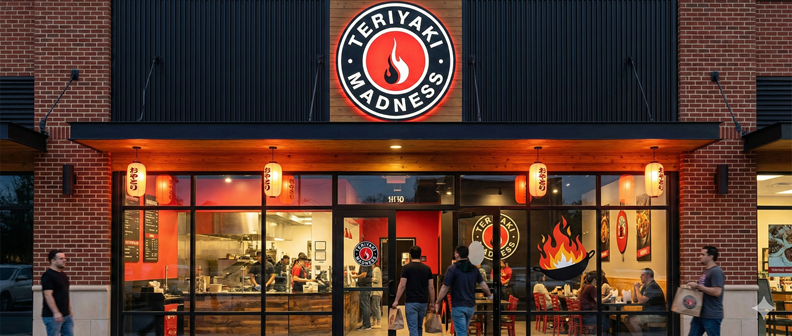
Teriyaki Madness

In New Haven, residential parking districts require permits with steep $35 to $70 fines, while street sweeping further reduces vehicle staging availability. Dozo Asian Bistro at 1450 Whalley Ave commands strong local loyalty for its beautiful decor and specialty Pineapple Fried Rice.

This entrenched presence validates regional demand, creating a distinct market gap for a high-velocity operator focused on rapid speed of service and value-driven pricing. Operating Teriyaki Madness in Wooster Square involves managing the wok station bottleneck, relying on the physical endurance of cooks to maintain “Wok Hei” agitation during the lunch rush.

Management must also synchronize rice production cycles and fluffing techniques to prevent ingredient exhaustion, avoiding a 30-45 minute recovery time. Yale University provides a massive economic anchor of 12,058 staff and 15,490 students.

When projecting CapEx, operators must factor in Historic District Guidelines, which mandate muted tones and prohibit illuminated signs. To navigate the parking constraints, the App-Integrated Curbside Protocol and geofencing technology are engineered to facilitate drive-thru volumes at end-cap locations.

Sources: newhavenct.gov, yale.edu

Franchise overview
Marketing fund (in %)3%
Minimum cash required$107,500
Franchise fee$45,000
Who Has an AdvantageA Multi-Unit Empire Builder to truly benefit from supply chain economies.
Who Is a Bad FitA person unfamiliar with the intensity of running a kitchen.
Request more information now
Camp Bow Wow

Downtown New Haven presents a complex physical grid of one-way streets and aggressive meter enforcement, where curbside drop-offs are virtually impossible without securing a dedicated loading zone permit.

This environment is anchored by Yale University and Yale New Haven Hospital, supplying a dense network of over 25,000 employees whose long shifts drive intense demand for localized pet care.

Operating successfully requires executing a rigorous Interview Day assessment to filter behavioral risks, while managing staff compassion fatigue within a high-volume live animal facility. The local demographic is actively served by Paw Haven, which utilizes highly tailored branding to capture the premium university audience.

However, this creates a distinct gap for standardized, accessible care tailored to the broader local workforce. Camp Bow Wow captures this demographic by deploying its in-house Behavior Buddies training curriculum to offer structured, value-added boarding packages.

From a regulatory perspective, navigating New Haven’s mixed-use noise standards requires significant capital; operators must factor an estimated $50,000 to $75,000 into Tenant Improvement budgets for STC 60-rated walls and acoustic baffles.

Sources: yale.edu, library.municode.com

Franchise overview
Marketing fund (in %)2%
Minimum cash required$285,000
Franchise fee$50,000
Request more information now
About the page’s author, Thomas Jepsen
Franchise consultant & growth strategist
As seen in: Yahoo Finance

Master’s in Accounting, Strategy & Control. FBA-certified in franchises and FDD analysis. Raised institutional funding and completed a venture exit. Has advised aspiring franchisees on 20+ different business categories. Thomas helps aspiring franchisees evaluate brands objectively.

Thomas Jepsen
Rush Bowls

Evaluating the Westville commercial center for a Rush Bowls installation reveals a complex physical infrastructure, defined by a dense, historic one-way street grid and strict two-hour curb parking limits that complicate high-volume turnover.

When projecting initial build-out timelines, operators must factor in the Westville Village Design District Regulations, which demand that all exterior signage and materials be harmoniously related to the historic architecture, frequently requiring expensive custom fabrication.

A massive local demand generator is the nearby Yale New Haven Hospital, which introduces nearly 14,984 employees operating on 24-hour shifts who require portable, fast-casual dining. The local incumbent, Bora Bora Smoothie Cafe, operates a highly successful, expansive multi-category menu, creating an underserved market gap for a streamlined, rapid-execution concept dedicated strictly to bowls.

Front-line operations require staff to meticulously manage the tempering process of frozen acai to achieve proper spoonable consistency, while strictly enforcing clean spoon protocols to prevent topping bar cross-contamination.

Mechanically, the franchise’s industrial blending protocols use specialized high-torque equipment designed to maintain a stable product texture for off-premise consumption.

Franchise overview
Marketing fund (in %)2%
Minimum cash required$57,500
Franchise fee$39,000
Who Has an AdvantageThe health-conscious marketer who is familiar with guerrilla marketing.
Who Is a Bad FitThe supply chain novice.
Request more information now
USA Insulation

The Dwight neighborhood presents extreme urban density characterized by narrow, one-way streets, making it exceptionally difficult to secure 40 feet of curb space for commercial rigs without triggering police details or permit requirements.

However, this territory holds immense residential potential driven by Yale University’s reported 14,000 staff members, fueled specifically by the institution’s localized Homebuyer Program. Operating in this historic housing stock requires factoring the CT State Building Code and IECC 2021 standards into site assessments, carefully documenting necessary technical infeasibility exceptions.

USA Insulation uses specialized truck heaters to maintain strict chemical drum temperatures, ensuring foam cures correctly without shrinking. Field teams use thermal imaging tablets to calculate the specific R-Value gap for homeowners, while installation crews are trained to feel back-pressure to safely fill blind wall cavities.

By focusing on streamlined, volume-based execution, this infrastructure is engineered to capture the underserved mid-market demographic, serving as an accessible, high-capacity complement to the high-end historic restoration work performed by esteemed local experts like Nealon Insulation.

Franchise overview
Marketing fund (in %)2%
Minimum cash required$70,000
Franchise fee$50,000
Who Has an AdvantageA sales team builder with technical/construction material experience.
Who Is a Bad FitThe operationally-passive desk lover who doesn't want to get behind the wheel.
Request more information now
Franchise owner success story
Client Success Story
“Thomas helped me find the franchise that actually fit my goals.”
— Jeff, Franchise Owner
Read case study
Magnolia Soap

Operating a retail boutique on the East Shore requires navigating Connecticut’s strict plastic reduction mandates. A massive, affluent customer base is anchored by Yale University, generating heavy evening foot traffic for retail concepts.

When calculating your initial COGS and packaging budget, you must factor in the mandatory procurement of premium paper or reusable bags to comply with this plastic bag state legislation.

Environmental friction is high, as locals actively seek out refill stations, forcing the franchise to emphasize low-waste bars and laundry soap to overcome the cultural resistance to new, plastic-wrapped goods.

The active incumbent, Soap-edi at 1022 Chapel Street, leverages a strong hyper-local ingredient narrative. However, their restrictive 10:00 AM to 6:00 PM operating model leaves the prime post-work and post-dinner shopping windows unserved, allowing Magnolia Soap to capture evening consumer demand.

Inside the micro-factory, operators must meticulously manage the 4-to-6 week curing rack pipeline to prevent overcrowding. Staff must balance active production workflows with immediate customer service. This on-site production eliminates freight costs for heavy liquid products.

Franchise overview
Marketing fund (in %)1%
Minimum cash required$52,500
Franchise fee$60,000
Request more information now

Factors to consider

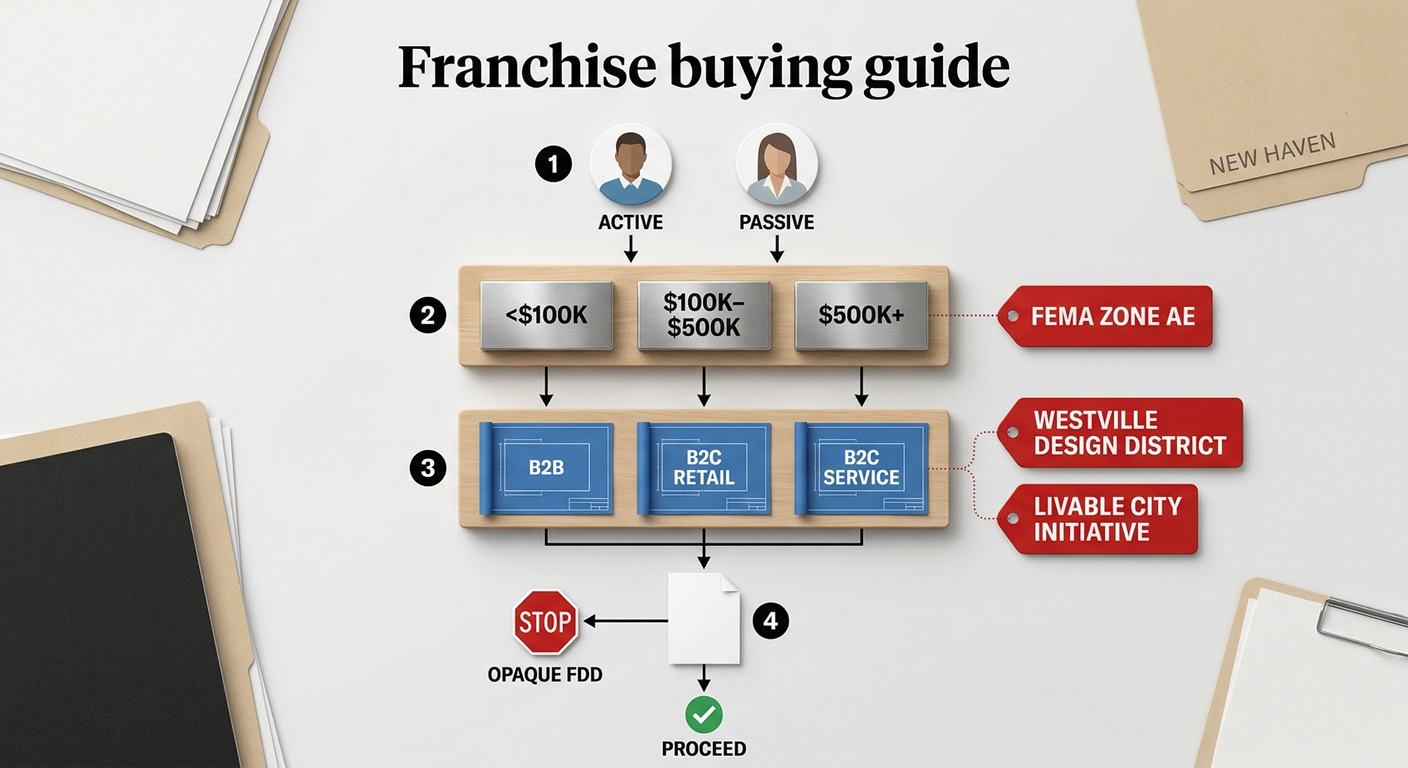
The Downtown Crossing Project (Phase 4) heavily restricts vehicular traffic between Temple Street and Congress Avenue. Re-routing away from natural commercial corridors will starve street-level locations of organic volume and force daily delivery adjustments through 2027. Site utilities demand substantial upfront capital; connecting a standard 1.5-inch commercial water meter triggers a scheduled $18,490 exaction fee to the Greater New Haven Water Pollution Control Authority, due prior to service.

If non-standard site plans are required, the Planned Development District ordinance mandates a bespoke approval process with a $3,700 base application fee. Properties situated in the FEMA Flood Zone AE typically require mandatory flood coverage, acting as a recurring OpEx multiplier. Staffing presents additional retention hurdles, as the New Haven Hiring Initiative at Yale University offers baseline service workers between $23.60 and $29.62 per hour, creating intense competitive market pressure for entry-level talent.

Operators must verify these municipal exactions with the local utility board for annual inflation adjustments.

Local operator insights

In recent conversations, local operators expanding sit-down dining footprints told me they are extremely optimistic about the new waterfront Mixed-Use Long Wharf (MULW) zoning district. These operators are thrilled that the Downtown Crossing Project is surgically reconnecting isolated neighborhoods to create highly visible, at-grade commercial corner lots. Nevertheless, interviewees expressed profound frustration regarding a severely paralyzed Livable City Initiative (LCI), which has frozen standard occupancy inspections.

To circumvent this systemic bottleneck, local operators are meticulously verifying that prospective ground-floor leases are completely unencumbered by outstanding mega-landlord residential code violations.

Our Evaluation Methodology

  • 1
    Franchisor Vetting & Financial Due Diligence

    FDD evaluation flagged key players, litigation history. New Haven's energetic central underpinned franchise stability. Item 19 analysis provided economic evidence of concept.

  • 2
    Local Market Feasibility & Demographic Alignment

    New Haven's median (50th percentile) age, Yale student body population, & city center population density shaped our franchise selections. Firms must complement existing retail.

Expert Reviewer(s)

Poll Morefield
Poll Morefield
Franchise Lawyer

15+ years of experience with franchise law.

Fred M. Wolfe
Fred M. Wolfe
CPA

10+ years experience as a CPA.

Earnings disclaimer

If any earnings claims are made for a prospective franchisor, those are verified against the Item 19 FDD version specified.

Disclaimer: The information above is not an offer to sell or a solicitation of an offer to buy a franchise. Offers are made only through the delivery of a FDD. Consult a lawyer when reviewing an FDD. Investment ranges/requirements sourced from FDDs.

Book Free Franchise Consultation