Bloomin' Blinds
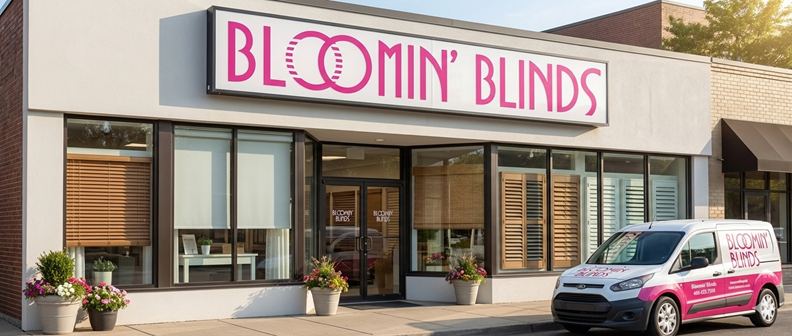
Touro Infirmary provides a stable employment anchor for the Uptown area, with an estimated 1,880 healthcare professionals generating consistent residential service demand. Wren's Tontine Shade & Design successfully dominates the heritage luxury market, establishing an expansion opportunity for operators offering mid-market affordability and modern technological convenience. To serve this demographic, Bloomin' Blinds uses mobile service vans equipped with cloud-connected iPads and laser distance meters, allowing technicians to quote and close sales on-site to increase ticket velocity. Inside the vehicle, management must execute Van Inventory Tetris, meticulously organizing thousands of small parts to prevent technicians from wasting billable hours digging for components. Field staff must also manage Installation Surprises by carrying 'Crisis Kits' for unknown substrates like steel lintels or crumbling drywall. Navigating the neighborhood presents severe physical friction due to widespread infrastructure decay. Service fleets must frequently reroute around temporary roadway closures on Magazine Street, while persistent street flooding and potholes dramatically increase mechanical wear-and-tear on service vehicles, resulting in unpredictable delays in reaching scheduled client appointments across the territory.
| Franchise overview |
| Marketing fund (in %) | 2% |
| Minimum cash required | $25,000 |
| Franchise fee | $49,500 |
| Who Has an Advantage | A charismatic owner-operator with strong project management skills, comfortable with fleet management. |

Request more information now
Camp Bow Wow
Servicing the 4,410-employee base at Tulane University requires Camp Bow Wow operators to navigate severe infrastructure challenges across Uptown New Orleans. The local streetscape is characterized by poor surface maintenance, resulting in excessive wear and tear on operational vehicles. Additionally, Residential Parking Permit zones block non-resident vehicles after two hours, which aggressively complicates routine client drop-off logistics. Site visibility is further constrained by the New Orleans Comprehensive Zoning Ordinance, which limits awning typography to twelve inches and restricts internal illumination. These historic mandates increase dependency on digital marketing acquisitions. Within the facility, management must actively mitigate staff burnout while managing the "Webcam Effect" of constant remote monitoring. The local market relies heavily on Canine Connection at 4920 Tchoupitoulas Street, an established facility highly valued for providing flexible boarding without mandatory group play. This leaves a structural service gap for a heavily sanitized, all-day-play concept. The franchise model is engineered to capture this specific demand by deploying the "Camper Cam" system, which broadcasts live HD feeds to mobile devices to maintain operational discipline and enforce accountability.
| Franchise overview |
| Marketing fund (in %) | 2% |
| Minimum cash required | $285,000 |
| Franchise fee | $50,000 |
Request more information now
About the page’s author, Thomas Jepsen
Franchise consultant & growth strategist
Master’s in Accounting, Strategy & Control. FBA-certified in franchises and FDD analysis. Raised institutional funding and completed a venture exit. Has advised aspiring franchisees on 20+ different business categories. Thomas helps aspiring franchisees evaluate brands objectively.

USA Insulation
Mr. Green Jeans Insulation operates as a ubiquitous, highly rated local leader with deep building science expertise, producing an expansive opportunity for a specialized franchise to capture overflow demand via immediate availability and rapid installation timelines. Navigating this territory entails mitigating the rigid system of alternating one-way streets and Neutral Grounds, which cause severe logistical paralysis for 24-foot box trucks; the strict enforcement of "Parking Against Traffic" violations on narrow corridors frequently necessitates expensive street closure permits. Operators should verify how the New Orleans Historic District Landmarks Commission regulates historic assemblies, as guidelines rarely approving spray foam can restrict addressable revenue, mandating the procurement of alternative materials. Operationally, crews must maintain chemical drum temperatures via truck heaters to ensure accurate curing and enforce a rigorous "Gun Cleaning Ritual" with solvents to protect expensive injection equipment. To optimize margins against these variables, proprietary ownership of a Cleveland-based resin manufacturing plant is designed to secure supply lines, facilitating the capacity to service B2B renovation demand driven by the LSU Health Sciences Center expansion.
| Franchise overview |
| Marketing fund (in %) | 2% |
| Minimum cash required | $70,000 |
| Franchise fee | $50,000 |
| Who Has an Advantage | A sales team builder with technical/construction material experience. |
| Who Is a Bad Fit | The operationally-passive desk lover who doesn't want to get behind the wheel. |
Request more information now
Paul Davis
Executing mitigation logistics in the Warehouse District requires navigating massive commercial traffic routing toward the Ernest N. Morial Convention Center, alongside strict parking enforcement for hazmat and commercial tankers. The mixed-use density forces crews into expeditious loading zones, creating frequent noise and parking conflicts with overhead residential condos that carry high risks of towing. Local market capacity is heavily anchored by Guarantee Restoration Services, a massive regional provider equipped to handle catastrophic hurricane losses. Their macro-level operational focus creates an underserved market gap for highly responsive, localized mitigation targeting smaller residential and condo leaks. Paul Davis captures this specific overflow demand through an integrated mitigation and reconstruction model that manages the entire claims lifecycle, maximizing revenue per claim by retaining the high-value rebuild contract. Franchisees must verify compliance with the Historic District Landmarks Commission, which prohibits plastic and internally illuminated box signs in favor of suspended metal or hand-painted glass. This mandate directly increases brand standard variance costs and lowers night-time visibility. Field execution demands precise Xactimate sketching to capture every claim line item, paired with daily psychrometric moisture mapping in a dry log to furnish data-driven proof for insurers.
| Franchise overview |
| Marketing fund (in %) | N/A |
| Minimum cash required | $87,500 |
| Franchise fee | $136,500 |
Request more information now
Magnolia Soap
In the New Orleans Central Business District, Magnolia Soap targets a dynamic retail environment anchored by the Caesars Superdome, which generates massive, event-driven foot traffic spikes requiring operators to manage intense two-hour crush loads. While a highly successful local boutique securely commands the premium biohacking and luxury wellness sector, its specialized focus generates overflow demand for accessible, casual gift retail. The franchise is engineered to capture this demographic through a refillable laundry soap bucket model that facilitates a habitual consumption loop to drive recurring foot traffic. Logistically, operators must navigate severe delivery constraints on narrow, one-way streets, as prohibitions against loading on public rights-of-way force managers to schedule 4 AM drop-offs or hand-cart supplies from remote locations. Furthermore, operators should verify how Vieux Carré Commission controls impact exterior branding; restrictions on illuminated signage may necessitate non-illuminated metal letters, directly reducing night-time visibility. Inside the store, management must balance intricate maker workflows against immediate retail demands to protect delicate soap batches, while rigorously mitigating slip hazards from oils and glitter during interactive workshops.
| Franchise overview |
| Marketing fund (in %) | 1% |
| Minimum cash required | $52,500 |
| Franchise fee | $60,000 |
Request more information now
Rush Bowls
The Bywater neighborhood presents strict logistical hurdles, defined by the St. Claude Avenue neutral ground parking ban. Parking on the median is aggressively enforced with towing, forcing customers to parallel park on extremely narrow streets and severely limiting grab-and-go access. From a regulatory perspective, operators must analyze the local HDLC Guidelines as a mandatory due diligence variable. This full-control historic district prohibits standard internal illumination, requiring custom fabricated, pedestrian-oriented signage that adds an estimated $4k to $7k in build-out CapEx. Despite these constraints, the territory is supported by the New Orleans Center for Creative Arts, driving steady youth demographic traffic from 600 students. The local beverage market is deeply anchored by Satsuma Cafe @ 3218 Dauphine St, a highly successful institution celebrated for its cold-pressed menu and authentic patio experience. This establishes a massive local consumer base while revealing a clear market gap for high-speed, climate-controlled throughput. Rush Bowls is engineered to capture this overflow demand. Franchisees must execute strict operational controls, such as inspecting IQF fruit deliveries for thaw-refreeze clumping and highlighting dietary "Mods" to prevent costly remakes. The brand's "No Hoods, No Ovens" kitchen architecture is designed to bypass complex Class 1 ventilation requirements in historic Bywater properties.
| Franchise overview |
| Marketing fund (in %) | 2% |
| Minimum cash required | $57,500 |
| Franchise fee | $39,000 |
| Who Has an Advantage | The health-conscious marketer who is familiar with guerrilla marketing. |
| Who Is a Bad Fit | The supply chain novice. |
Request more information nowDuring the ongoing SWBNO Smart Meter rollout, properties face localized water shutoffs and billing shifts tied to Act 393 temporary fixed-rate calculations, creating a variable monthly utility expense. Furthermore, the Sewerage and Water Board of New Orleans (SWBNO) schedules a 20% administrative surcharge based on the total estimated construction cost of water connections, due before a foundation is poured. Geographic logistics also require attention; sites in FEMA Special Flood Hazard Areas or Repetitive Loss Areas may trigger strict elevation requirements and flood policies under the National Flood Insurance Program, which operators will need to verify with their underwriters. Local hiring is competitive, as macro-economic anchors like Ochsner Medical Center increase local wage competition, offering over $23.14 per hour. Mobile service operators must prepare for arbitrary utility blockages, while fixed-location QSR models require high-margin inventory to absorb the upfront administrative connection surcharges and retention hurdles.