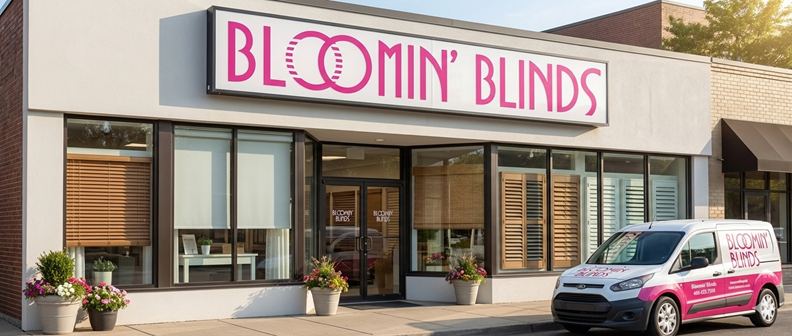
Bloomin' Blinds
Evaluating Bloomin' Blinds in the South Perry District demands a focus on mobile logistics and specialized zoning. The corridor carries a Pedestrian Street Designation, which strictly limits sidewalk interruptions by driveways and mandates visually interesting frontage. Operators should verify how these access limits may impact van fleet storage, as restricted curb cuts frequently necessitate off-site parking leases that add to operational expenditures. The neighborhood's physical reality includes severe parking congestion, requiring technicians to navigate tightly packed side streets when consulting with local homeowners or the surrounding Providence Sacred Heart Medical Center workforce. The existing market is expertly anchored by local operators like Factory Rep Blinds, which heavily focus on smart home motorization and complex installations. This creates a distinct service gap for dedicated post-installation maintenance and rapid adjustments. Bloomin' Blinds captures this underserved repair niche by deploying structured field protocols, including obscure parts identification via network crowdsourcing and strict ultrasonic maintenance of cleaning tanks to prevent cross-contamination. Utilizing a centralized repair-first approach, the franchise is equipped to build a localized database that supports future replacement sales without requiring the extensive retail footprint typical of traditional design showrooms.
| Franchise overview |
| Marketing fund (in %) | 2% |
| Minimum cash required | $25,000 |
| Franchise fee | $49,500 |
| Who Has an Advantage | A charismatic owner-operator with strong project management skills, comfortable with fleet management. |

Request more information now
Camp Bow Wow
The active incumbent, The Bark Park at North Monroe, successfully captures the free-roaming pet demographic in Spokane with expansive play areas and a no-crate philosophy. This operational style creates unabsorbed demand for highly structured, secure containment models. Camp Bow Wow addresses this gap by deploying a standardized Interview Day protocol with a behavioral assessment rubric. This system safely regulates pack dynamics during gate control transitions, while continuous sanitation labor utilizing industrial wet-vacs maintains strict hygiene standards. The Sacred Heart Medical Center provides a dense concentration of healthcare workers requiring reliable 12-hour pet care to support this model. Operating in the Browne's Addition Historic District requires navigating strict preservation mandates. Any exterior modification necessitates a Certificate of Appropriateness. Operators must verify how historic overlay requirements impact acoustic tenant improvements, as mitigating commercial kennel noise demands substantial investments in soundproofing baffles to prevent nuisance complaints. The physical environment compounds these challenges, as the historic street grid features narrow roadways and severely limited off-street parking. This structural friction complicates customer drop-off and pick-up sequencing, requiring precise traffic management to avoid blocking thoroughfares.
| Franchise overview |
| Marketing fund (in %) | 2% |
| Minimum cash required | $285,000 |
| Franchise fee | $50,000 |
Request more information now
About the page’s author, Thomas Jepsen
Franchise consultant & growth strategist
Master’s in Accounting, Strategy & Control. FBA-certified in franchises and FDD analysis. Raised institutional funding and completed a venture exit. Has advised aspiring franchisees on 20+ different business categories. Thomas helps aspiring franchisees evaluate brands objectively.

Paul Davis
Operators evaluating the Spokane University District should verify how the Downtown University Zoning and Parking Reform impacts fleet logistics during legal due diligence. The elimination of parking minimums near transit creates reduced off-street parking inventory, necessitating the purchase of commercial loading zone permits reported at $100 annually per vehicle. This environment is compounded by active paid parking meters ranging from $1.00 to $5.50 per hour, presenting a logistical hurdle that requires precise crew management to avoid escalating fines. The local housing market is anchored by over 7,400 Gonzaga University students, driving consistent demand for restoration services through student housing turnover. The incumbent, Safeway Restoration, holds prestigious technical certifications, but their extended project timelines reveal an unmet demand for rapid, scaled completion dates. Paul Davis is positioned to capture this segment by deploying standardized workflows. Operational realities require meticulous tracking of high-value drying assets via digital inventory systems and strict coordination of subcontractors to maintain schedules. The franchise's Performance Scoring System is engineered to track response times, facilitating low-cost lead generation from national insurance carriers.
| Franchise overview |
| Marketing fund (in %) | N/A |
| Minimum cash required | $87,500 |
| Franchise fee | $136,500 |
Request more information now
USA Insulation
Operating within Spokane's Climate Zone 5B introduces distinct logistical barriers, as winter snow and ice on the steep grades of the South Hill and Riverside areas make maneuvering heavy 26-foot insulation rigs dangerous. This terrain constraint is projected to reduce operational efficiency by 20 to 30 percent during the first and fourth quarters. Despite these physical hurdles, the aging rental housing stock surrounding Gonzaga University, reported to enroll over 7,400 students, provides a robust customer base of landlords motivated to lower utility overheads. USA Insulation is positioned to capture this underserved demand for non-invasive injection foam retrofitting, effectively expanding the energy-efficiency market alongside trusted, veteran-owned blow-in cellulose providers like Pacific Insulation LLC. Additionally, operators should verify how Spokane Municipal Code 17D.100 may impact project timelines, as exterior alterations in historic districts like Browne's Addition must remain visually compatible. Crews must master chemical temperature control via truck heaters to facilitate proper curing and strictly use acetone-based solvents to dissolve accidental overspray. Deploying custom-engineered application rigs facilitates a blind injection technique, equipping teams to complete whole-home installs efficiently.
| Franchise overview |
| Marketing fund (in %) | 2% |
| Minimum cash required | $70,000 |
| Franchise fee | $50,000 |
| Who Has an Advantage | A sales team builder with technical/construction material experience. |
| Who Is a Bad Fit | The operationally-passive desk lover who doesn't want to get behind the wheel. |
Request more information now
Rush Bowls
The Garland District presents specific structural and logistical barriers for the Rush Bowls model. Operators should verify how the Spokane Historic Landmarks Commission’s Certificate of Appropriateness review restricts modern cabinet signs. Converting unreinforced masonry structures can trigger mandatory seismic retrofitting codes, potentially adding $50,000 in structural steel requirements during build-out, while a pending 12% parking tax increase on surface lots directly compresses net operating margins. Logistically, Garland Avenue’s narrow two-lane configuration lacks dedicated loading docks, and winter snow accumulation routinely forces delivery trucks to double-park or navigate tight alleyways, complicating the fresh-product supply chain. The model is engineered to maintain topping hygiene and balance blender station speed to prevent bottlenecks during peak hours. Proximity to North Central High School provides a predictable afternoon demand surge of over 1,600 students. The entrenched incumbent, The Garden 509, successfully drives loyalty through hyper-local mission alignment, highlighting an unfulfilled consumer preference for extended evening operating hours and rapid service times. To capture this demographic, Rush Bowls deploys an AI-segmented mobile app that facilitates online ordering directly to the prep line.
| Franchise overview |
| Marketing fund (in %) | 2% |
| Minimum cash required | $57,500 |
| Franchise fee | $39,000 |
| Who Has an Advantage | The health-conscious marketer who is familiar with guerrilla marketing. |
| Who Is a Bad Fit | The supply chain novice. |
Request more information now
Magnolia Soap
Magnolia Soap enters the West Central market with an opportunity to complement established experiential retailers like The Plucky Duck. While the incumbent excels at class-based workshops, the franchise is designed to capture underserved local demand for a consistently stocked, high-volume retail environment offering grab-and-go convenience. Operators should verify regulations enforced by the Spokane Historic Landmarks Commission during early due diligence. Exterior modifications in this historic zone require a Certificate of Appropriateness, carrying a $250 Full Commission review fee and the operational risk of a 120-day Demolition Delay, which can significantly increase pre-revenue carrying costs. Logistically, retail traffic is constrained by frequent maintenance closures on the Monroe Street Bridge, an infrastructure bottleneck that forces commuters onto Maple and Walnut streets, thereby reducing spontaneous trips. Despite these access issues, the nearby Spokane County Campus provides a reliable base of over 1,000 daytime administrative workers. Inside the facility, operators face the daily friction of mitigating staff olfactory fatigue through high-turnover HVAC systems, alongside managing strict NFPA 30 storage protocols for Category 4 Flammable Liquids to prevent fire suppression triggers. To offset fluctuating foot traffic caused by bridge detours, the model is engineered to deploy a refillable laundry soap bucket program that facilitates habitual consumption and repeat visits.
| Franchise overview |
| Marketing fund (in %) | 1% |
| Minimum cash required | $52,500 |
| Franchise fee | $60,000 |
Request more information nowStreet changes and ongoing heavy construction for the US 395 North Spokane Corridor (NSC) limit traditional traffic patterns, with the Washington State Department of Transportation scheduling completion metrics toward 2040. Drivers will need to route via alternative arterials to avoid the resulting physical logistics hurdles on eastern and western freight lines. At the permit desk, operators will encounter scheduled transportation impact fees codified under SMC 17D.075, which fund multimodal bicycle and pedestrian infrastructure and are due at filing. Furthermore, state guidelines verify a 2025 statutory wage floor of $16.66 per hour, alongside strict overtime-exempt salary thresholds reaching $77,968.80 annually for large employers. Retail and restaurant models must adjust standard compensation models and rely more heavily on hyper-local walk-up traffic to counter the physical arterial disruptions. Meanwhile, mobile operators must carefully map 3rd-party delivery windows around the persistent highway construction zones to maintain scheduling reliability.